
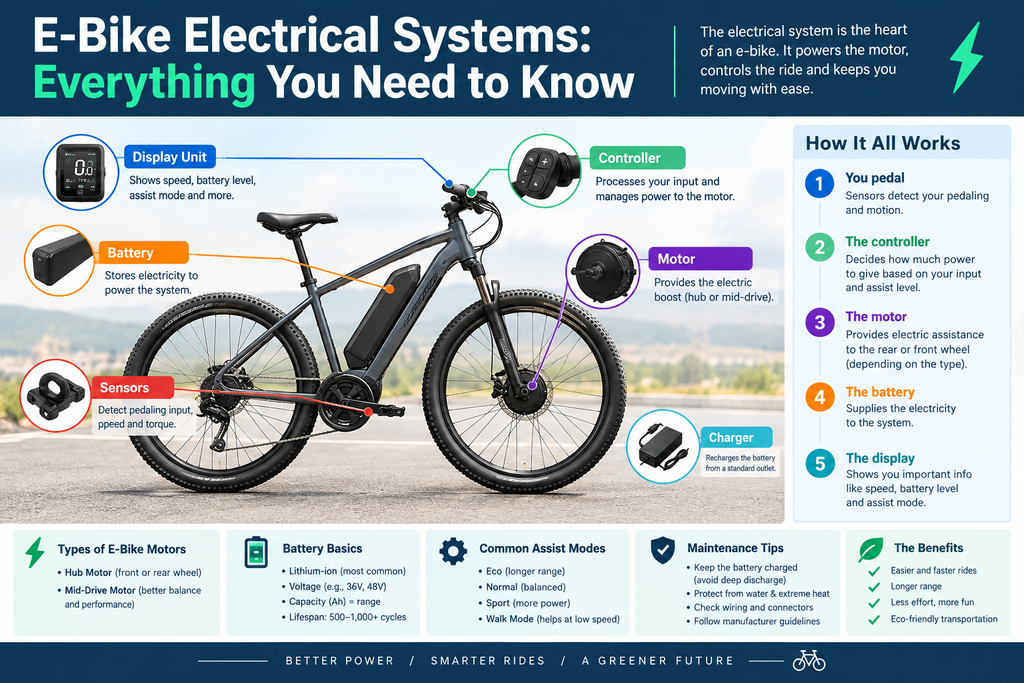
Understanding your e-bike electrical system is important for every rider, especially when using an e-bike for commuting, everyday travel or leisure rides across the UK. From the battery and motor to the controller, display and pedal assist sensor, each electrical component has an important role in keeping your e-bike running properly. This guide explains how these components work, common problems to look out for and when to seek professional help from an e-bike specialist in Woking, UK.
1. E-Bike Battery: The Power Source
What is an e-bike battery?
The e-bike battery is a lithium-ion battery pack that stores and delivers electrical energy to other parts of the system. The battery is normally encased in a robust, weatherproof enclosure. Battery capacity is normally expressed in Volts (V), Amp-hours (Ah), and Watt-hours (Wh), which represent electrical pressure, capacity, and energy stored respectively.
Why Is the Battery Important?
The battery is the primary source of energy in your e-bike’s electric system. This is because the battery provides the energy needed by the electric motor and other electrical parts. The capacity and health of the battery will determine how far you will go between charges.
How Does an E-Bike Battery Work?
Once the bike is turned on, a chemical process that takes place in the batteries produces electrical energy in the form of DC current. This electric current moves through the wiring of the bike as the Battery Management System (BMS) controls the battery cells. It also safeguards them from factors like overcharging, over-discharge, and overheating.
What Affects E-Bike Battery Performance?
Weather, riding conditions and usage can all affect e-bike battery performance.Cold UK winters , hot weather, hills, extra load and high levels of assistance can all cause more energy to be consumed, thus reducing your range. Poor battery care, continuous exposure to water, road salt and dirt can contribute to battery degradation, reducing its performance and riding range.
How to Maintain an E-Bike Battery?
Make sure that you follow the manufacturer’s guidelines on how to charge the battery and store it when not in use. Store the battery in a cool and dry place when you are storing it for long periods of time. Even though most e-bikes’ batteries will cope with UK rain and road spray, avoid using a jet wash as strong water jets can force moisture into electrical areas.
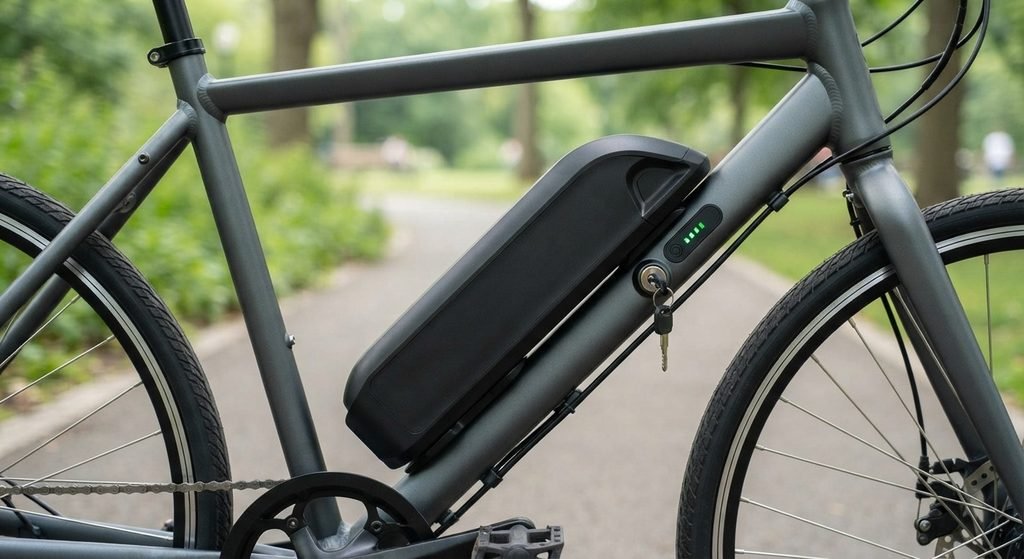
Need help with your e-bike battery? Woking Bikes Battery & Electrical System Services can diagnose battery and electrical faults in Woking, UK, helping you maintain reliable battery performance for smoother, longer rides.
2. E-Bike Motor: Turning Power Into Movement
What Is an E-Bike Motor?
The E-bike motor transforms electricity from the battery into mechanical power that assists in wheel turning. Modern electric bikes are fitted with brushless DC motor technology.
Why Is the E-bike Motor Important?
E-bike motor gives the electrical assistance that facilitates cycling up slopes, against the wind or during long trips. For UK riders, an e-bike motor can be really helpful in cycling uphill or in windy weather conditions.
How Does an E-Bike Motor Work?
The motor receives the electrical impulses from the controller that generates electrical impulses. Electrical impulses charge coils inside the motor, thus generating the magnetic field that rotates with permanent magnets inside the motor.
Types of E-Bike Motors
Two types of e-bike motors are available – hub motor and mid-drive motor. The hub motor is located within the front or rear wheel hub, and mid-drive motor is positioned around the bottom bracket.
What are Common E-Bike Motor Problems
Excessive load, improper maintenance and difficult cycling conditions can lead to motor malfunctioning. Ingress of water through the damaged seals can affect the performance of internal bearings, while the internal gears can wear down.
How to Maintain an E-Bike Motor
Keep the motor and surrounding areas free from excessive mud and debris, particularly after riding on wet UK roads, muddy paths or off-road trails. On mid-drive e-bikes, regular chain maintenance is also important because a worn chain can place additional strain on the drivetrain.
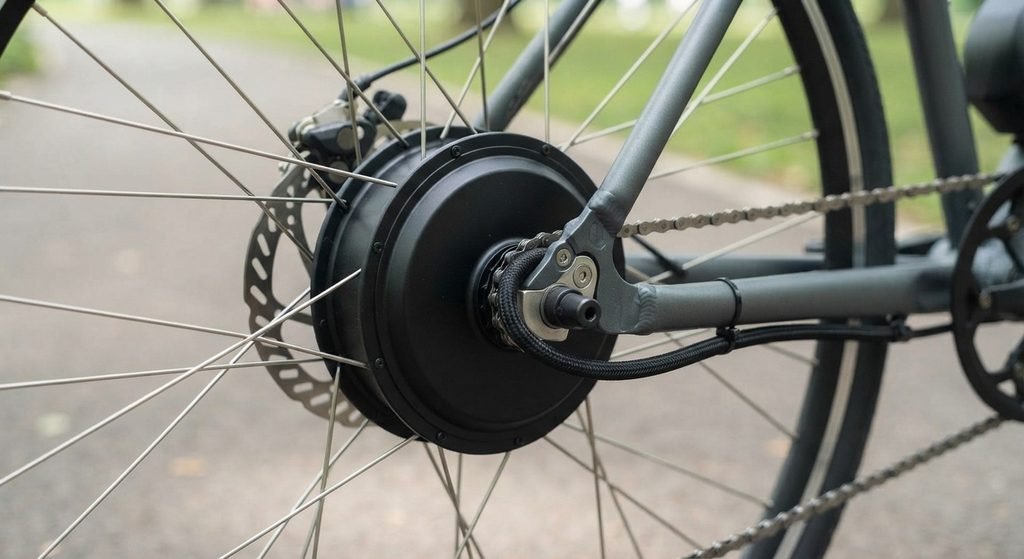
Experiencing motor problems? Woking Bikes expert technicians can diagnose motor faults and identify the underlying electrical or mechanical issue. so you can enjoy smooth and reliable assistance on every ride.
3. Motor Controller: Managing Electrical Power
What Is an E-Bike Motor Controller?
The motor controller is one of the critical elements of an electric bike’s electrical system. This component is responsible for managing the communications and powering between the battery, motor, pedal assist sensor, and display and controls.
Why Is the Motor Controller Important?
This component regulates the amount of electrical power going to the motor. It helps control acceleration and motor response, which allows an e-bike to offer assistance depending on the chosen parameters and sensor readings.
How Does the Motor Controller Work?
The motor controller gets signals from the pedal assist sensor, brake sensors, throttle, and display. It processes this information and regulates the current going to the motor depending on the chosen assistance level. The motor controller can also shut down the power supply to the motor during braking, which ensures safe driving in the UK.
Common Motor Controller Problems and Their Signs
Motor controller problems can be caused by overheating, electrical overload, moisture or damaged wiring. Common signs include a non-responsive display, inconsistent motor assistance, unusual motor behaviour or no motor power even when the battery is charged. Similar symptoms can also result from other electrical components, so proper diagnosis is important.
How to Prevent Motor Controller Problems
Keep the controller protected from excessive heat, moisture and physical damage. Avoid riding through deep water, keep electrical connections clean and secure, and have damaged wiring or connectors checked promptly. Regular e-bike servicing in the Woking UK can also help identify potential controller issues before they become more serious.
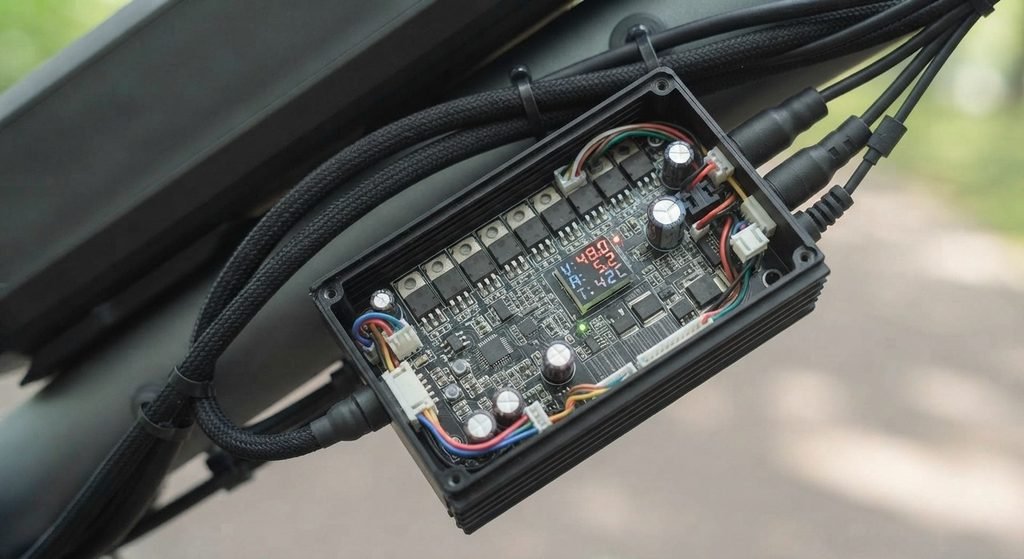
Having controller issues? Our experienced technicians at Woking Bikes can accurately diagnose power, wiring and controller-related faults helping keep your e-bike’s power delivery smooth and responsive all around Woking.
4. E-Bike Display: Your Information and Control Centre
What Is an E-Bike Display?
The e-bike display is the rider’s main information and control interface.The display may vary depending on the bike model and include either a simple LED signaling system or advanced LCD or colour display featuring additional functions.
Why Is the Display Important?
The electric bike display lets riders monitor key information such as battery level, riding speed,trip distance and assistance level while adjusting available settings. A low-voltage cable connects the display to the controller, allowing it to send commands and show live e-bike information.
What Are Common E-Bike Display Problems
Water infiltration, cable damage, poor connection and impact represent common problems with the e-bike display. This issue may appear important for the rider using his/her e-bike in rainy weather in the UK.
How to Troubleshoot Display Issues
Check the manufacturer’s recommended troubleshooting steps first. Inspect accessible connections for visible damage or loose fittings and make sure the battery is correctly installed and charged. If the problem continues, professional diagnosis can identify whether the issue is with the display, wiring, controller or another component.
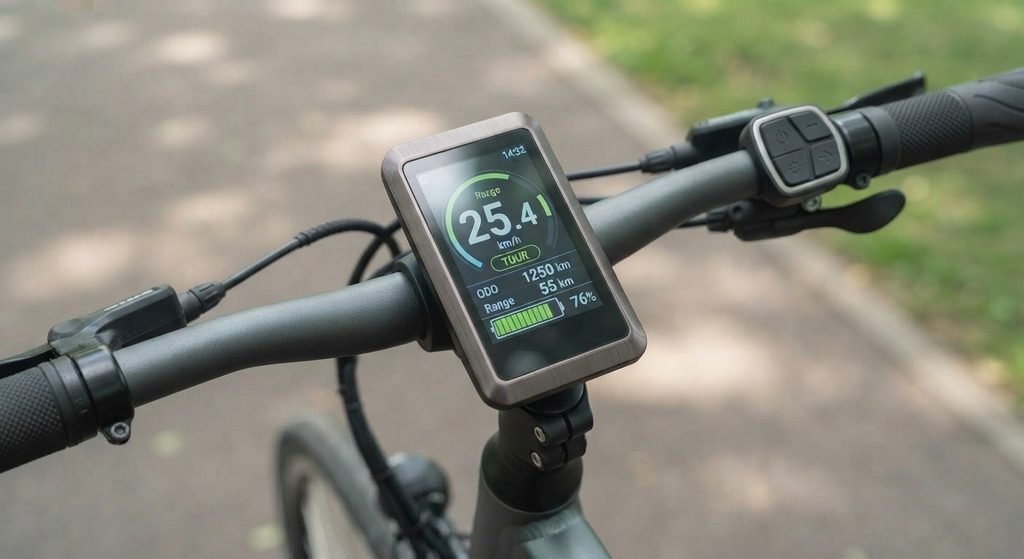
Facing display or error-code issues? Our expert technicians can diagnose display, wiring and communication faults so you can clearly monitor your e-bike and enjoy a more convenient ride.
5. Pedal Assist Sensor: Detecting Your Pedalling
What Is a Pedal Assist Sensor?
The Pedal Assist Sensor (PAS) determines how you are pedaling the bicycle and sends these signals to the controller of the e-bike.
Why Is the PAS Important?
The pedal assist sensor regulates the timing of motor assistance. When PAS operates correctly, it makes it possible for the electronic system to react to pedaling and provide assistance.
How Does a PAS Operate?
An electric bike PAS senses movement or pressure in the area near the crank and translates them into an electric impulse, which is then sent to the controller of the motor.
Types of Pedal Assistant Sensors
There are two types of PAS. A cadence sensor detects whether the pedals rotate and provides assistance at a predetermined level of support. A torque sensor determines the force put on the pedals by a rider.
Common PAS Troubles and Their Symptoms
Mud, dirt, road debris or a displaced sensor can affect the pedal assist sensor, especially after riding on muddy UK riding paths or wet roads. Signs include intermittent, delayed or no motor assistance while pedalling. If the display and battery work normally but the motor does not respond correctly, the PAS or its wiring may need checking.
How to Prevent PAS Problems
Keep the PAS and surrounding components clean, dry and properly aligned. Avoid excessive water, mud and debris around the sensor, and check its wiring regularly. Regular electric bike servicing can also help identify PAS issues early.
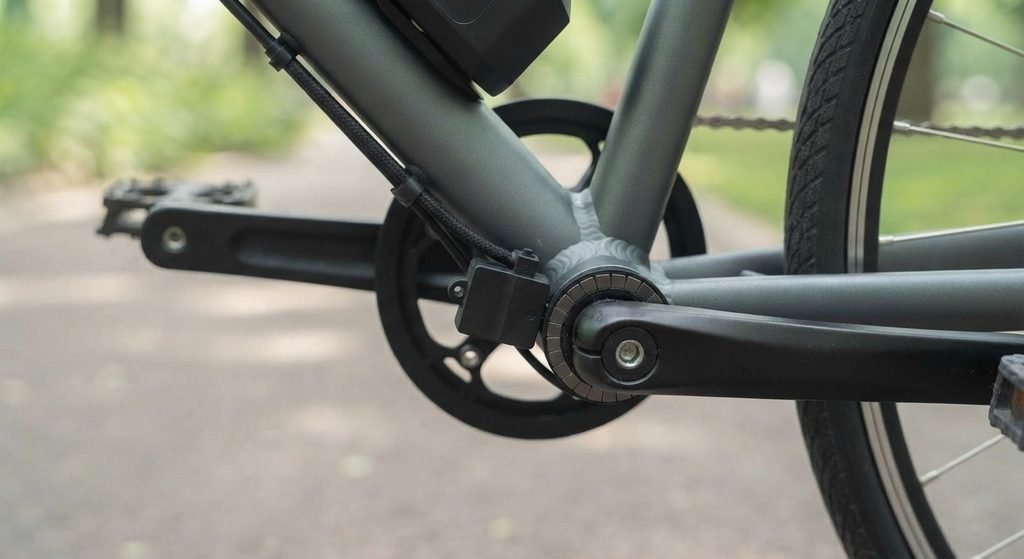
Having PAS problems? Our specialist technicians can diagnose sensor, wiring and motor-assistance faults helping your e-bike respond smoothly and consistently to every pedal stroke.
When It’s Time to Visit a Professional?
Some electrical problems are better assessed by a professional e-bike technician, particularly when an issue affects your bike’s reliability or safe operation on UK roads and cycle routes.
- Persistent Fault Codes or Warnings: The codes/warning messages remain even after initial diagnosis.
- Unexpected Range Loss: Your e-bike is suddenly experiencing a loss in its regular range of motion.
- Physical Damage: Physical damage is visible on the battery case, motor casing, or wiring/connections.
- Burning Smell: You may notice any odd electrical or burning odor which signals some sort of internal electrical problem.
How Woking Bikes Can Help With Your E-Bike Electrical System?
Woking Bikes can help resolve complex e-bike electrical issues through our specialised Battery & Electrical System repair services, starting from just £25. With over 20 years of combined experience serving e-bike riders in Woking, UK, our professional technicians use specialist, manufacturer-level diagnostic tools to accurately isolate faults across your e-bike’s motor, battery pack, sensors and display module.
Based at our workshop at 12 Broadway, Woking, we provide clear pricing before any work begins, with no hidden charges or unexpected fees.
Frequently Asked Questions
1. What are the main electrical components of an e-bike?
The core parts of the system are the battery, motor, motor controller, display and PAS. Together, they control and deliver electrical assistance.
2. How long does an e-bike battery last?
The electric bike battery lifespan depends on many factors such as quality of the battery, how you charge it, use it, store it and the temperature. Following the manufacturer’s care instructions can help extend its useful life.
3. Why is my e-bike losing power while riding?
Some causes include low or old battery, bad connections, problems with the controller, sensor malfunction and motor trouble. Professional diagnosis can identify the actual cause.
4. Can rain damage an e-bike’s electrical system?
E-bikes are normally made to resist rain and road water, but if there is damage to the seals, connectors or electrical system parts, it can affect it. Do not pressure wash your bike.
5. When should I get my e-bike’s electrical system checked?
Consider professional inspection if you experience repeated error messages, sudden power loss, unusual motor behaviour, charging problems or a significant drop in battery range.
Need Help With an E-Bike Electrical Problem?
Don’t let an electrical fault stop your ride. Contact Woking Bikes for professional e-bike electrical diagnosis and repair in Woking, UK, with services starting from just £25 and no hidden charges.
CONTACT WOKING BIKES
Address:
12 The Broadway, Woking GU21 5AP, United Kingdom
Map: View on Google Maps
Phone: +44 1483 363063
Website: www.wokingbikes.co.uk
Opening Hours: Monday–Saturday, 10:00 AM – 7:00 PM
Let Woking Bikes keep you moving.