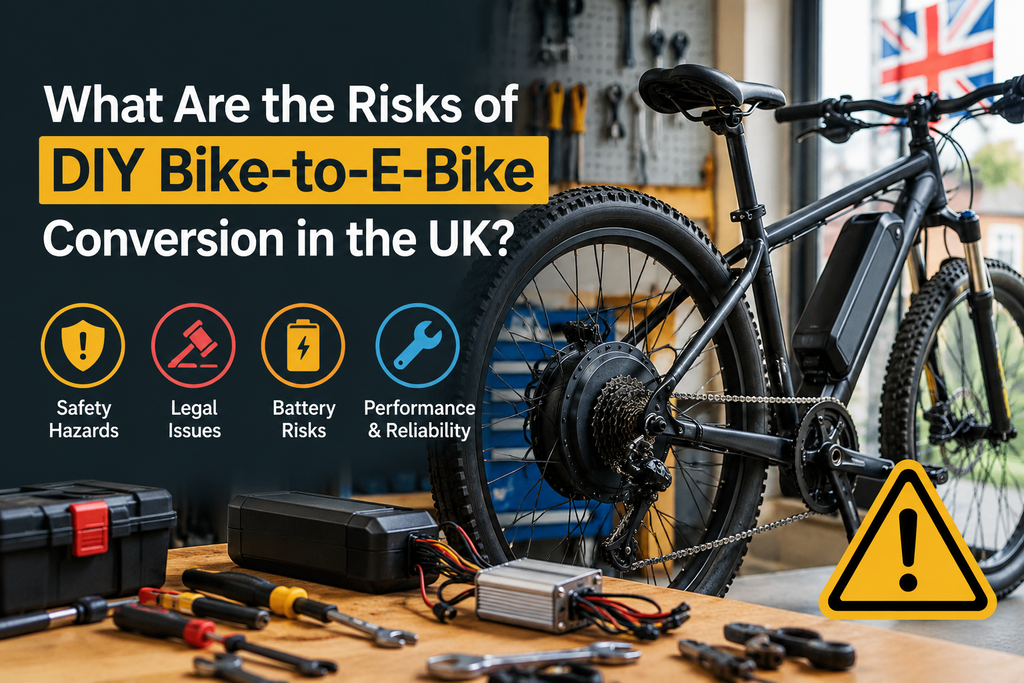
Bicycles are getting major upgrades, and electric bikes (e-bikes) are changing the way people move around the UK. As more people become interested in low-cost, environment friendly transportation, many bike riders are choosing DIY bike-to-e-bike conversion to turn their existing bicycles into electric bikes rather than purchasing a new factory-made e-bike.
DIY conversion kits may seem to be an easy way to convert a bicycle into an e-bike with a motor and battery but they can cause safety, mechanical, and legality issues. Before converting a bicycle, it is important to explore the hidden risks of a bike-to-e-bike conversion and how Woking Bikes professional e-bike conversion service can provide a safer, more reliable solution.
Key Risks of DIY Bike-to-E-Bike Conversion
Understanding these risks before starting can help UK riders make informed decisions and avoid costly safety and mechanical problems.
1. Safety and Structural Risks of DIY E-Bike Kits
An electric bike conversion kit can alter the performance and structure of the bicycle in question. For the UK riders, it is important to understand the mechanical and structural dangers that come with such a process. The following are possible issues:
- Component Incompatibility: Combining different parts, for example, the electric motor, lithium-ion batteries, and motor controllers, from other sources can cause difficulties in electrical and performance compatibility.
- Improper Installation: This involves improper wiring and poor installation of hub motor parts, which increases the chances of mechanical and electrical malfunctioning of the bike.
- Frame and Fork Stress: A typical bicycle frame may not have been designed to accommodate the additional structure and torque generated by the electric motor and battery pack. This extra stress can cause cracks, bending, alignment problems or reduced stability.
2. Unexpected Costs of DIY E-Bike Conversion
The cost of purchasing an electric bike conversion kit for UK riders may seem affordable at first but extra maintenance costs can quickly add up. Below are some potential problems:
- Increased Wear of E-Bike Components: The increased weight and motor power might cause added wear on the drive chain, tyres, cassettes, wheels, and other normal bike components.
- Specialist Bicycle Tools: The installation and tuning of mid-drive or hub kits require specialist tools that are not typically available in normal bike toolkits at home.
- Extra E-Bike Repairs: Any technical issues encountered after installation would increase costs for diagnosis and replacement, which could reduce the savings made by doing the conversion yourself.
3. UK Legal and Insurance Risks
A bike-to-e-bike conversion in the United Kingdom must comply with certain legal and insurance requirements. DIY conversions can make it more difficult to ensure that all requirements are properly met. Some of these concerns include the following:
- E-Bikes Requirements: The e-bike resulting from the conversion and used on public roads must satisfy the legal requirements of EAPC (Electrically Assisted Pedal Cycle) in the UK. This implies a maximum of 250 W of continuous rated motor power with assistance cut off of 15.5 mph.
- Insurance Conditions: Altering a conventional bicycle likely affects the insurance policy of the rider. It is advisable to find out the insurance company’s policies concerning modification of bicycles before doing the conversion.
- Warranty Issues: Altering an existing bicycle frame or fitting it with an additional electric conversion kit may affect the warranty of the manufacturer.
4. Braking, Handling and Public Safety
The assistance provided by an electric motor may alter the way your bike accelerates, decelerates, and handles on public highways. It is important for UK e-bike riders to be aware of these dynamics effects. Here are some possible issues:
- Insufficient Stopping Power: The extra weight and increased speeds of the bicycle with its assistance can make the use of rim brakes, which were designed for conventional bicycles, more demanding. This can result in longer stopping distances and reduced braking performance, often requiring an upgrade to hydraulic disc brakes.
- Handling Issues: Unfavorable weight balance caused by battery packs or inappropriate front-motor installation can cause poor steering, balance problems and affect stability at higher speeds.
- Greater Hazard to Others: The conversion of the bicycle into an e-bike may pose greater hazards to others if its speed, braking, or throttle handling is unpredictable.
5. Electrical and Fire Risks of DIY E-Bike Conversion
In a DIY e-bike conversion, various complicated electrical components must be used correctly to ensure their proper functioning. However, wrong installation and component incompatibility may lead to electrical faults and overheating which, in turn, may cause fires. Here are some possible risks:
- Poor Wiring: Incorrect connections of wiring looms can lead to electrical faults, interruptions in power supply, and even to dangerous short circuits.
- Battery Hazards: Low quality and faulty lithium-ion battery cells, especially if they are wrongly installed, may cause thermal runaway and significant fire risks particularly if they are incorrectly installed or maintained
- Charging Risks: Incorrect charging system and the use of an inappropriate charger significantly increase the overheating and malfunctioning of the e-bike battery.
Leave the DIY Risks Behind: Choose Woking Bikes for Professional Bike-to-E-Bike Conversion
After seeing the hidden risks of a DIY conversion, choosing experienced professionals can help ensure the job is handled properly from the initial assessment to final testing. At Woking Bikes, our expert mechanics provide professional bike to e-bike conversion in Woking UK, using high-quality components, specialist workshop tools and careful installation practices.
Your bicycle deserves more than a rushed kit installation. Here’s how Woking Bikes turns a standard bicycle into a properly assessed, professionally fitted and carefully tested e-bike.
- 20+ Years of Expertise & Bike Assessment: With over 20 years of experience in cycling and workshop work, our expert technicians thoroughly check your frame, wheels, brakes and existing components before recommending appropriate motors, batteries or conversation system
- Quality Tools and Components: We have professional workshop tools and reliable and quality components to install your motors, batteries, controllers, wiring and displays accurately avoiding the uncertainty of basic DIY equipment and unsuitable parts.
- Clean & Secure Electrical Installation: Our mechanics take care of wiring and connect everything properly to avoid electrical issues that arise from poorly fitted DIY conversions kits
- UK Road-Legal Conversion We do bike to e-bike conversion keeping in mind all requirements concerning electric bikes in the UK, including 250W motor limit and 15.5 mph assistance cut-off in order to provide road-legal EAPC.
- No Hidden Fees: We explain all work that needs to be done and prices before we start doing the conversion in order to avoid any unexpected expenses during the conversion process.
- Hub, Mid-Drive or Full Conversion: Whether you need a hub motor, mid-drive system or full conversion, we assess your bicycle and riding needs before recommending a suitable setup and carefully fitting the required components.
Frequently Asked Questions
1. Is it legal to convert a bicycle into an e-bike in the UK?
Yes, it can be used on public roads, if the requirements for an EAPC are satisfied. These include the maximum 250W continuous rated motor power and assistance cut-off speed at 15.5 mph.
2. Is DIY e-bike conversion safe?
It can pose certain risks because the bicycle, its components and installation may not be appropriate. Hiring a qualified professional can minimize the risks.
3. Can I use any battery and charger with an e-bike conversion system?
No. Battery and charger have to be appropriate to use with the system. Otherwise, there will be a risk of overheating and fires due to an incompatible or low-quality battery and charger.
4. Can converting my bicycle affect its insurance or warranty?
It is possible that modifying your bike would impact your insurance and warranties you have already purchased for it.
5. How do I know if my bicycle is suitable for an e-bike conversion?
The bicycle has to be in a decent condition and capable of handling the extra weight and loads caused by the installation of the conversion kit.
Ready to Convert Your Bike to Electric?
Do not let the dangers of converting a bike to e-bike on your own ruin your attempt at an easy bike upgrade by turning it into a costly one. Our skilled mechanics at Woking Bikes will help you with that by evaluating your bike and fitting it with a proper system.
Ready to make a switch? Get in touch with us now for professional guidance and a quote for your bike-to-e-bike conversion in Woking, UK.
CONTACT WOKING BIKES
Address:
12 The Broadway, Woking GU21 5AP, United Kingdom
Map: View on Google Maps
Phone: +44 1483 363063
Website: www.wokingbikes.co.uk
Opening Hours: Monday–Saturday, 10:00 AM – 6:00 PM
Let Woking Bikes keep you moving